
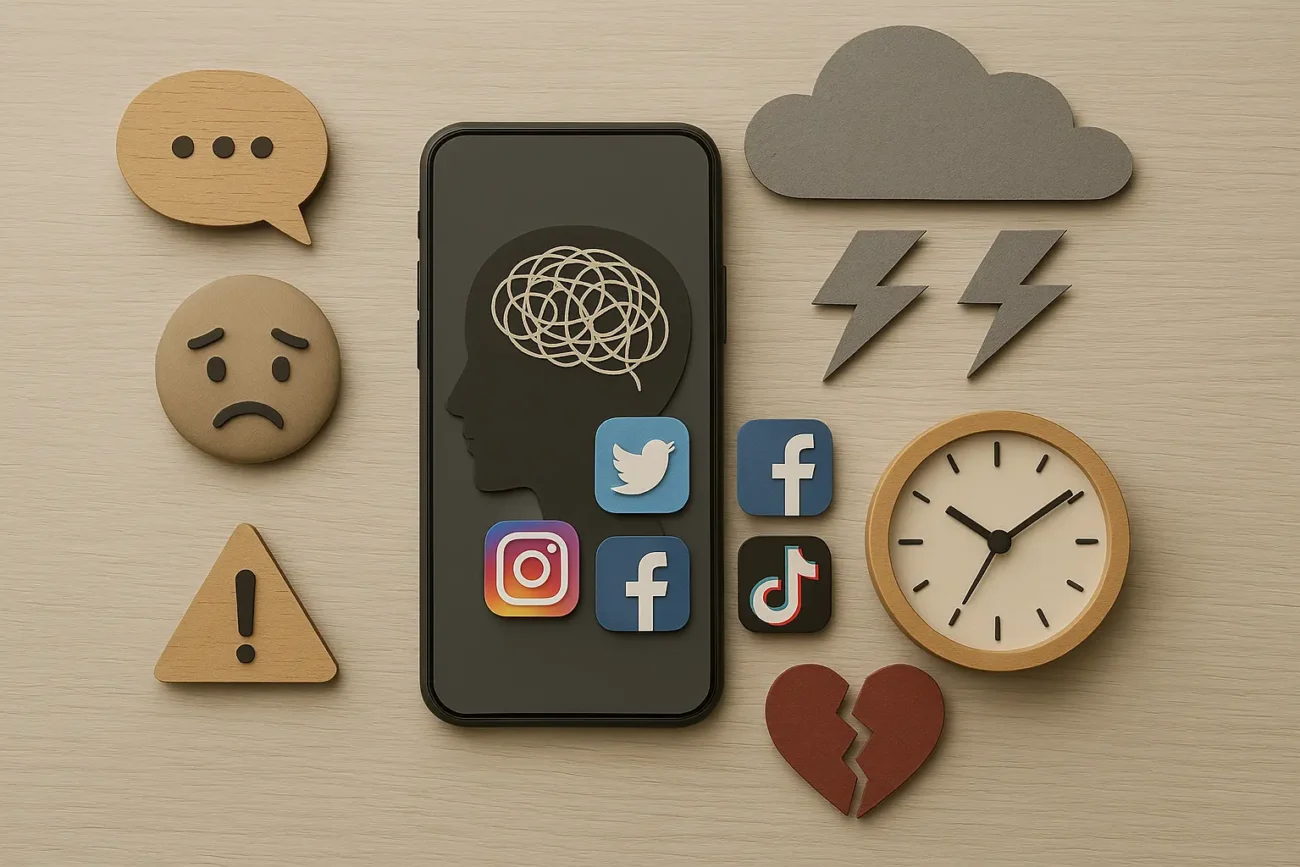
Social media has woven itself into the fabric of our modern lives. Platforms like Instagram, TikTok, X (formerly Twitter), and Facebook connect billions across the globe, offering pathways to information, entertainment, and social engagement. Yet, as our screen time tallies rise, so too does the concern surrounding the impact of social media on mental health.
While social media can indeed foster positive experiences – from building online communities to providing valuable support networks – it’s also increasingly linked to a surge in anxiety, depression, diminished self-esteem, and disrupted sleep patterns.
The Bright Side of the Screen: Positive Aspects of Social Media
Before we delve into the potential pitfalls, it’s crucial to acknowledge that social media isn’t inherently negative. For many, it can be a source of upliftment and genuine benefit.
Potential boons for mental well-being include:
- Access to vital support groups and mental health communities
- Exposure to inspiring and educational content
- Maintaining connections with loved ones, near and far
- Unleashing creativity through various mediums
- Discovering new passions and interests
When used with intention and in moderation, social media can indeed be a tool for meaningful connection and growth.
The Shadow of the Scroll: How Social Media Can Negatively Affect Mental Health
Despite its potential advantages, the impact of social media on mental health often leans towards the negative, particularly when usage becomes excessive, unconscious, or driven by comparison.
Here are some key areas of concern:
1. The Comparison Trap: Fueling Low Self-Esteem
Social media often presents a curated highlight reel of other people’s lives. Individuals tend to share their best moments, creating an illusion of constant perfection that can leave others feeling inadequate in comparison.
The ripple effects:
- Engaging in relentless social comparison
- Developing and exacerbating body image issues
- Internalizing pressure to live or appear a certain way
2. The Fear of Missing Out (FOMO): Cultivating Anxiety
Witnessing others seemingly enjoying exotic vacations, thriving relationships, or exciting events can trigger a deep-seated feeling of being left out, even if you are content with your offline life.
The toll on mental well-being:
- Increased anxiety and unease
- Feelings of restlessness and dissatisfaction
- A growing sense of disconnection
3. The Pull of Addiction: The Cycle of Compulsive Use
Social media platforms are expertly designed to keep you scrolling. Notifications, likes, and comments trigger the release of dopamine in the brain, creating a reward loop that can lead to addictive behaviors.
Signs of problematic overuse:
- Immediately checking apps upon waking or just before sleep
- Experiencing anxiety or irritability when unable to access social media
- Difficulty concentrating on tasks or being fully present in offline interactions
4. The Harsh Reality of Cyberbullying and Harassment: Inflicting Psychological Harm
Negative comments, online trolling, and public shaming can inflict significant psychological damage, particularly on vulnerable individuals like teenagers.
The serious risks:
- Social withdrawal and isolation
- Development or worsening of depression and anxiety
- In severe cases, the emergence of suicidal thoughts
5. The Silent Thief: Sleep Disruption
Using screens late at night or engaging with stimulating content before bed can significantly interfere with your natural sleep-wake cycle.
The detrimental side effects:
- Experiencing insomnia and difficulty falling or staying asleep
- Reduced sleep quality and feeling unrested
- Increased irritability, stress levels, and difficulty concentrating during the day
6. The Weight of Information Overload: Leading to Mental Exhaustion
Constant exposure to a barrage of news, opinions, and often conflicting information can overwhelm your cognitive capacity, leading to emotional and mental fatigue.
The potential consequences:
- Experiencing mental fatigue and burnout
- Increased anxiety or even panic attacks
- Difficulty focusing and maintaining concentration
Who Bears the Brunt? Vulnerable Populations
While the negative impact of social media on mental health can affect anyone, certain groups are particularly susceptible:
- Adolescents and young adults: Their sense of self is still forming, making them more vulnerable to social comparison and peer pressure.
- Individuals with pre-existing mental health conditions: Social media can exacerbate symptoms of anxiety, depression, and other disorders.
- Those experiencing social isolation: While seeking connection online, they may find it doesn’t fully replace meaningful offline interactions.
- Content creators: They often face immense pressure to maintain engagement, deal with online criticism, and constantly perform for an audience.
Cultivating a Healthier Digital Diet: Using Social Media Mindfully
The aim isn’t necessarily to completely disconnect, but rather to develop healthier habits in our digital interactions. Here are some practical strategies to safeguard your mental well-being:
Setting Boundaries: Implementing Time Limits
Utilize built-in screen time features on your devices or explore third-party apps designed to help you monitor and limit your daily social media usage.
Curating Your Digital Space: Mindful Following
Actively unfollow accounts that trigger feelings of anxiety, inadequacy, or overwhelm. Instead, seek out pages that inspire, educate, or uplift you.
Embracing Digital Detox: Taking Intentional Breaks
Experiment with “no scroll” mornings, where you avoid social media for the first hour of your day, or consider implementing full social media detoxes on weekends to reconnect with the offline world.
Shielding Your Mind: Avoiding Doomscrolling
Establish clear boundaries around how and when you consume news online. Choose reliable sources and consciously take breaks from the constant stream of information.
Engaging with Purpose: Intentional Interaction
Shift from passive scrolling to active engagement. Use social media to genuinely connect with others, learn new things, or express your creativity, rather than simply filling idle moments.
Prioritizing the Real World: Investing in Offline Life
Dedicate time and energy to real-life hobbies, nurturing face-to-face relationships, and spending time in nature. Achieving a healthy balance is key to overall well-being.
Recognizing the Need for Support: When to Seek Professional Help
If you begin to notice any of the following patterns, it may be beneficial to reach out to a mental health professional:
- Social media has become your primary source of validation and self-worth.
- You consistently feel depressed, anxious, or angry after spending time on social media.
- You experience a strong urge to check social media and struggle to stop, even when you desire to.
- Your social media use is negatively impacting your sleep, focus, or real-life relationships.
Talking to a therapist can provide valuable insights into your digital habits and help you develop healthier coping mechanisms.
Final Reflections: Finding Your Balance in the Digital Age
The impact of social media on mental health is a multifaceted issue. While it offers undeniable opportunities for connection and entertainment, it also presents significant risks, particularly when used excessively or without conscious awareness. By establishing healthy boundaries, practicing mindful engagement, and prioritizing our offline well-being, we can navigate the digital landscape in a way that supports, rather than detracts from, our mental health.
Remember, your mental well-being holds far greater value than your follower count. Don’t hesitate to disconnect when needed and actively reconnect with the people and activities that truly enrich your life.
Frequently Asked Questions
1. Can social media directly cause depression or anxiety?
While it’s complex, social media can certainly contribute to the development or exacerbation of these conditions, particularly through mechanisms like social isolation, constant comparison, and cyberbullying. However, it’s often one contributing factor among many.
2. Is completely quitting social media the best solution?
Not necessarily for everyone. Many individuals find a healthy balance through moderated and intentional use. If quitting brings you relief, that’s a valid choice, but for most, finding a sustainable balance is more realistic.
3. How much time spent on social media is considered excessive?
There’s no magic number, but research suggests that exceeding around 2 hours per day has been linked to increased reports of mental health symptoms, especially among teenagers. Individual needs and experiences will vary.
4. Are certain social media platforms more detrimental to mental health than others?
Visually-driven platforms like Instagram and TikTok are often cited as contributing more to social comparison and body image issues. However, any platform can have negative effects depending on individual usage patterns and the content consumed.
5. Are there tools or apps that can help reduce social media usage?
Yes, numerous apps like Freedom, Moment, and Forest, as well as the built-in screen time settings on most smartphones, can assist in setting limits and encouraging digital breaks.